

Hey there! As a potting silicone supplier, I often get asked a bunch of questions about what our products can and can't do. One question that pops up quite a bit is, "Can potting silicone be used for potting gas sensors?" Well, let's dive right into this topic and break it down.
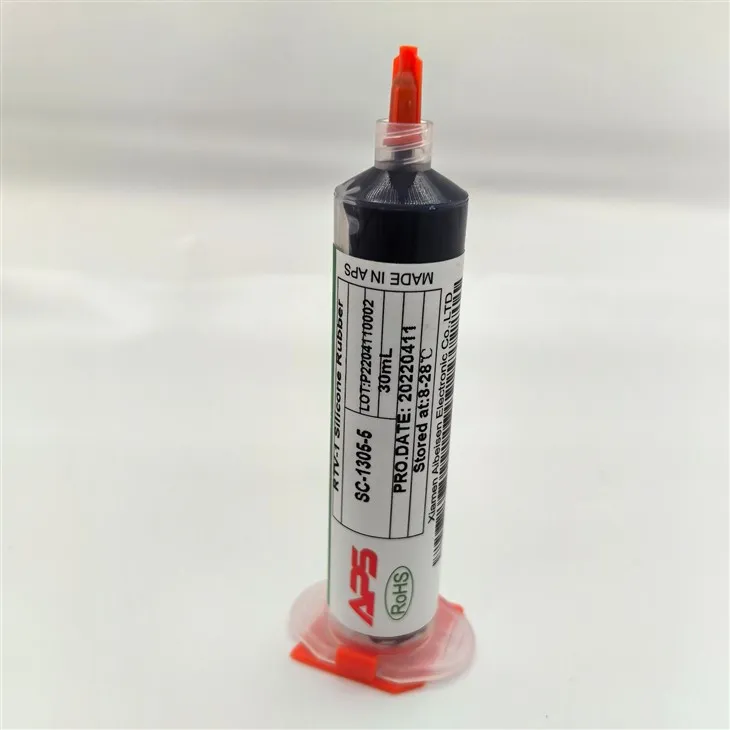
First off, let's talk about what potting silicone is. Potting silicone is a type of material that's used to encapsulate or protect electronic components. It's like a shield that keeps the components safe from things like moisture, dust, and mechanical stress. There are different types of potting silicone out there, such as the Black Adhesive Sealant Silicone Rtv, rtv silicone rubber adhesive sealant, and Black Rtv Silicone Adhesive Sealant. Each type has its own set of properties that make it suitable for different applications.
Now, onto gas sensors. Gas sensors are devices that detect the presence and concentration of certain gases in the environment. They're used in a wide range of industries, from environmental monitoring to industrial safety. These sensors are pretty delicate and need to be protected to work properly. That's where potting silicone comes in.
One of the main benefits of using potting silicone for gas sensors is protection. As I mentioned earlier, potting silicone can shield the sensor from external factors. Moisture is a big enemy of gas sensors. If moisture gets into the sensor, it can cause corrosion and affect the accuracy of the readings. Potting silicone forms a tight seal around the sensor, preventing moisture from seeping in.
Another advantage is mechanical protection. Gas sensors can be bumped or jostled during installation or use. Potting silicone acts as a cushion, absorbing shock and vibrations. This helps to prevent damage to the internal components of the sensor.

But, it's not all sunshine and rainbows. There are some considerations when using potting silicone for gas sensors. One of the biggest concerns is gas permeability. Gas sensors need to be able to detect gases in the environment, which means the potting material needs to allow the gases to reach the sensor. Some types of potting silicone may have low gas permeability, which can slow down the response time of the sensor or even prevent it from detecting gases altogether.
The curing process of potting silicone can also be an issue. Some silicones release by - products during the curing process. These by - products can contaminate the gas sensor and affect its performance. So, it's important to choose a potting silicone that has a low - outgassing formulation.
The temperature range is another factor. Gas sensors are often used in different temperature environments. Potting silicone needs to be able to withstand these temperature variations without losing its protective properties. If the silicone becomes too hard or too soft at certain temperatures, it can crack or lose its seal, leaving the sensor vulnerable.
When choosing a potting silicone for gas sensors, there are a few things you should look for. First, check the gas permeability of the silicone. You want a material that allows the target gases to pass through easily. You can usually find this information in the product datasheet.
Second, consider the curing process. Look for a silicone that cures at a reasonable temperature and has a low - outgassing rate. This will minimize the risk of contaminating the sensor.
Third, think about the temperature resistance. Make sure the silicone can operate within the temperature range of your gas sensor application.
Let's talk a bit more about the different types of potting silicone and how they might work for gas sensors. The Black Adhesive Sealant Silicone Rtv is known for its strong adhesive properties. It can form a tight bond with the sensor and its housing, providing excellent mechanical protection. However, you need to check its gas permeability and outgassing characteristics.
The rtv silicone rubber adhesive sealant is a versatile option. It has good flexibility, which can help with shock absorption. It also has a relatively fast curing time, which can be an advantage in mass - production scenarios. But again, gas permeability and temperature resistance need to be evaluated.
The Black Rtv Silicone Adhesive Sealant offers good chemical resistance in addition to its adhesive properties. This can be useful if the gas sensor is exposed to harsh chemicals in the environment.
In conclusion, potting silicone can be used for potting gas sensors, but it's not a one - size - fits - all solution. You need to carefully consider the properties of the silicone and how they match the requirements of your gas sensor application. If you're in the market for potting silicone for your gas sensors, we're here to help. We have a wide range of products, and our team can assist you in choosing the right one for your specific needs. Whether you're dealing with a small - scale project or a large - scale production, we can provide the solutions you're looking for. So, if you're interested in learning more or starting a purchase negotiation, don't hesitate to reach out.
References
- Various product datasheets of potting silicone materials
- Industry research on gas sensor protection and potting materials