

As a supplier of UV Clean Adhesive, I often encounter inquiries from customers about the compatibility of our products with various materials. One common question is whether UV Clean Adhesive can be used for bonding polycarbonate. In this blog post, I will delve into this topic, exploring the properties of polycarbonate, the characteristics of UV Clean Adhesive, and the feasibility of using them together.
Understanding Polycarbonate
Polycarbonate is a thermoplastic polymer known for its exceptional impact resistance, transparency, and heat resistance. It has a wide range of applications, including automotive parts, electronic devices, medical equipment, and safety glasses. The chemical structure of polycarbonate consists of carbonate groups linked by aromatic rings, which gives it unique physical and chemical properties.
One of the key features of polycarbonate is its surface energy. The surface energy of a material plays a crucial role in adhesion, as it determines how well an adhesive can wet and spread across the surface. Polycarbonate has a relatively low surface energy, which can make it challenging to bond with some adhesives. Additionally, polycarbonate is sensitive to certain chemicals and solvents, which can cause stress cracking or other forms of damage.
Characteristics of UV Clean Adhesive
UV Clean Adhesive, also known as Light Curable Adhesive, is a type of adhesive that cures when exposed to ultraviolet (UV) light. It offers several advantages over traditional adhesives, including fast curing times, high bond strength, and excellent chemical resistance. UV Clean Adhesive is typically formulated with a combination of monomers, oligomers, and photoinitiators, which react when exposed to UV light to form a strong, durable bond.
One of the main benefits of UV Clean Adhesive is its ability to cure quickly. Unlike traditional adhesives that may require hours or even days to fully cure, UV Clean Adhesive can be cured in a matter of seconds or minutes, depending on the intensity of the UV light and the thickness of the adhesive layer. This makes it ideal for high-speed manufacturing processes where efficiency is crucial.
Another advantage of UV Clean Adhesive is its high bond strength. When properly cured, UV Clean Adhesive can provide a strong, reliable bond between two surfaces. It can withstand a wide range of environmental conditions, including temperature fluctuations, humidity, and chemical exposure. This makes it suitable for use in a variety of applications, from electronics assembly to automotive manufacturing.
Feasibility of Bonding Polycarbonate with UV Clean Adhesive
The feasibility of using UV Clean Adhesive for bonding polycarbonate depends on several factors, including the surface preparation of the polycarbonate, the type of UV Clean Adhesive used, and the curing conditions.
Surface Preparation
Proper surface preparation is essential for achieving a strong bond between polycarbonate and UV Clean Adhesive. The surface of the polycarbonate should be clean, dry, and free of any contaminants, such as grease, oil, or dust. This can be achieved by cleaning the surface with a mild detergent and water, followed by rinsing and drying thoroughly.
In some cases, it may be necessary to perform additional surface treatment to improve the adhesion of the UV Clean Adhesive. This can include using a primer or a surface activator to increase the surface energy of the polycarbonate. However, it is important to choose a primer or surface activator that is compatible with both the polycarbonate and the UV Clean Adhesive to avoid any potential compatibility issues.
Type of UV Clean Adhesive
Not all UV Clean Adhesives are suitable for bonding polycarbonate. When selecting a UV Clean Adhesive for use with polycarbonate, it is important to choose a product that is specifically formulated for this application. Look for an adhesive that has been tested and proven to provide good adhesion to polycarbonate and that is compatible with the specific type of polycarbonate you are using.
Some UV Clean Adhesives are designed to be flexible, while others are more rigid. The choice of adhesive will depend on the specific requirements of your application. For example, if you need to bond two polycarbonate parts that will be subjected to some degree of movement or vibration, a flexible adhesive may be more suitable. On the other hand, if you need a strong, rigid bond, a more rigid adhesive may be the better choice.
Curing Conditions
The curing conditions of the UV Clean Adhesive are also important for achieving a strong bond with polycarbonate. The adhesive should be exposed to the appropriate intensity and wavelength of UV light for the recommended amount of time. This will ensure that the adhesive cures properly and forms a strong, durable bond.
It is also important to control the temperature and humidity during the curing process. High temperatures or humidity can affect the curing process and may result in a weaker bond. Make sure to follow the manufacturer's instructions regarding the curing conditions to ensure the best results.
Advantages of Using UV Clean Adhesive for Bonding Polycarbonate
When used correctly, UV Clean Adhesive can offer several advantages for bonding polycarbonate:
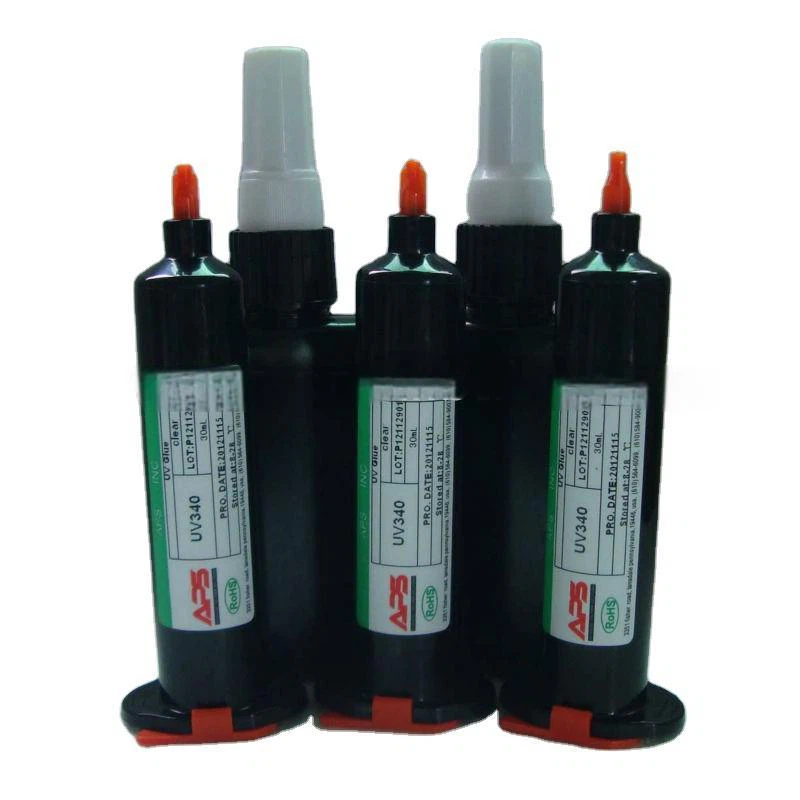

Fast Curing
As mentioned earlier, UV Clean Adhesive cures quickly when exposed to UV light. This allows for faster production times and increased efficiency in manufacturing processes.
High Bond Strength
UV Clean Adhesive can provide a strong, reliable bond between polycarbonate parts. It can withstand a wide range of environmental conditions and mechanical stresses, ensuring long-term durability.
Clean and Precise Application
UV Clean Adhesive is typically applied in a precise manner, which reduces the risk of excess adhesive and makes it easier to achieve a clean, professional-looking bond.
Chemical Resistance
UV Clean Adhesive offers excellent chemical resistance, which makes it suitable for use in applications where the bonded parts may be exposed to chemicals or solvents.
Conclusion
In conclusion, UV Clean Adhesive can be used for bonding polycarbonate, but it is important to take the necessary precautions to ensure a successful bond. Proper surface preparation, the selection of the right adhesive, and the control of the curing conditions are all crucial factors. By following these guidelines, you can achieve a strong, durable bond between polycarbonate parts using UV Clean Adhesive.
If you are interested in learning more about our UV Clean Adhesive products or have any questions about bonding polycarbonate, please feel free to contact us. Our team of experts is available to provide you with the information and support you need to make the right choice for your application. We look forward to working with you to find the best adhesive solution for your needs.
References
- "Polycarbonate: Properties, Processing, and Applications" by John A. Brydson
- "UV Curing Technology: Principles and Applications" by Christopher K. Ober and Michael T. Nivens
- Technical data sheets provided by UV Clean Adhesive manufacturers