

Hey there! As a supplier of UV Curing Adhesive, I've been getting a lot of questions lately about what happens when you add pigments to UV adhesives during the curing process. So, I thought I'd dive deep into this topic and share what I've learned over the years in the industry.
First off, let's quickly go over what UV curing adhesive is. UV Curing Adhesive, also known as UV Curing Adhesive, is a type of adhesive that cures or hardens when exposed to ultraviolet (UV) light. It's super popular because it offers fast curing times, high bond strength, and low shrinkage. These adhesives are used in a wide range of applications, from electronics assembly to medical device manufacturing and even in the automotive industry.
Now, let's talk about pigments. Pigments are substances that are added to materials to give them color. They can be organic or inorganic, and they come in a variety of colors and forms. When it comes to UV adhesives, adding pigments can have both positive and negative effects on the curing process.
Positive Effects of Pigment Addition
Aesthetics
One of the most obvious benefits of adding pigments to UV adhesives is the ability to customize the appearance of the bonded parts. In many industries, the color of the adhesive can be an important factor. For example, in the consumer electronics industry, manufacturers often want the adhesive to match the color of the device to create a more seamless and aesthetically pleasing look. By adding pigments, we can create UV adhesives in a wide range of colors, from bright and bold to subtle and neutral.
UV Blocking
Some pigments have the ability to absorb or scatter UV light. This can be a good thing in certain applications where you want to protect the underlying materials from UV damage. For example, in outdoor applications, UV light can cause degradation of plastics and other materials over time. By adding pigments that block UV light to the UV adhesive, we can help extend the lifespan of the bonded parts.
Hiding Imperfections
Pigmented UV adhesives can also be used to hide surface imperfections on the bonded parts. If there are scratches, dents, or other flaws on the surface, a pigmented adhesive can help cover them up and create a more uniform appearance. This is especially useful in applications where the appearance of the final product is important, such as in the furniture or automotive industries.
Negative Effects of Pigment Addition
Reduced Curing Depth
One of the biggest challenges when adding pigments to UV adhesives is the potential for reduced curing depth. Pigments can absorb or scatter UV light, which means that less light reaches the deeper layers of the adhesive. As a result, the adhesive may not cure completely, leading to reduced bond strength and durability. This is particularly problematic in applications where thick layers of adhesive are required.
Longer Curing Times
In addition to reduced curing depth, pigmented UV adhesives may also require longer curing times. Because the pigments absorb or scatter UV light, more energy is needed to fully cure the adhesive. This can slow down the production process and increase costs. To overcome this issue, manufacturers may need to use more powerful UV light sources or increase the exposure time.
Compatibility Issues
Another potential problem with adding pigments to UV adhesives is compatibility issues. Some pigments may react with the adhesive components, leading to changes in the adhesive's properties. For example, the pigment may cause the adhesive to become more brittle or less flexible. It's important to carefully select pigments that are compatible with the UV adhesive to ensure optimal performance.
How to Minimize the Negative Effects
Select the Right Pigments
The key to minimizing the negative effects of pigment addition is to select the right pigments. Look for pigments that have low UV absorption and high transparency. These pigments will allow more UV light to penetrate the adhesive, resulting in better curing depth and shorter curing times. Additionally, make sure the pigments are compatible with the UV adhesive and do not cause any chemical reactions.
Optimize the Pigment Loading
The amount of pigment added to the UV adhesive also plays a crucial role in the curing process. Too much pigment can significantly reduce the curing depth and increase the curing time, while too little pigment may not provide the desired color or UV blocking effect. It's important to find the right balance by conducting thorough testing and optimization.
Use Specialized UV Light Sources
To ensure proper curing of pigmented UV adhesives, it may be necessary to use specialized UV light sources. These light sources can be designed to emit light at specific wavelengths that are less absorbed by the pigments. By using the right UV light source, you can improve the curing depth and reduce the curing time.
Real - World Applications
Let's take a look at some real - world applications where pigmented UV adhesives are used.
Jewelry Making
In the jewelry industry, UV adhesives are often used to bond gemstones and other components. Pigmented UV adhesives can be used to create unique and colorful designs. For example, a jeweler may want to use a red pigmented adhesive to bond a red gemstone to a metal setting, creating a cohesive and eye - catching look.
Display Manufacturing
In the display manufacturing industry, UV adhesives are used to bond the various layers of a display together. Pigmented UV adhesives can be used to create black borders around the display, which can improve the visual contrast and make the content on the display more vibrant.
Automotive Interior Assembly
In the automotive industry, UV adhesives are used for interior assembly, such as bonding trim pieces and decorative elements. Pigmented UV adhesives can be used to match the color of the interior, creating a more luxurious and customized look.
Conclusion
In conclusion, adding pigments to UV adhesives can have both positive and negative effects on the curing process. While pigments can enhance the aesthetics, provide UV blocking, and hide imperfections, they can also reduce the curing depth, increase the curing time, and cause compatibility issues. However, by carefully selecting the right pigments, optimizing the pigment loading, and using specialized UV light sources, these negative effects can be minimized.
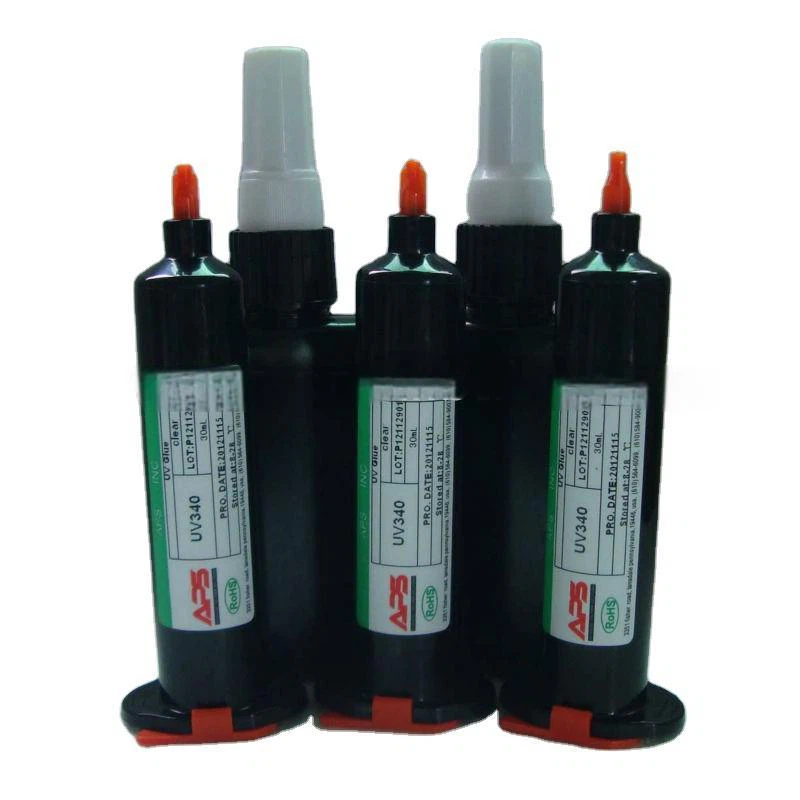

If you're interested in using pigmented UV Curing Adhesive for your application, or if you have any questions about our UV Sealant Glue or Light Curable Adhesive, feel free to reach out. We're here to help you find the best adhesive solution for your needs.
References
- Bradley, D. J., & Vojnovic, B. (2017). Photoinitiation, photopolymerization and photocuring: Past, present and future. Progress in Polymer Science, 71, 103 - 140.
- Dietliker, K. (1998). Chemistry & technology of UV & EB formulation for coatings, inks & paints. SITA Technology.
- Fouassier, J. P. (1995). Photoinitiation, photopolymerization and photocuring: Fundamentals and applications. Hanser.