

Silicone adhesives have become indispensable in various industries due to their unique properties and versatility. One of the critical performance indicators of silicone adhesives is peel strength, which significantly impacts their suitability for different applications. As a silicone adhesive supplier, understanding and effectively communicating the concept of peel strength is crucial for helping our customers make informed decisions.
Understanding Peel Strength
Peel strength refers to the force required to separate an adhesive bond from a substrate at a specific angle and rate. It is typically measured in units of force per unit width, such as pounds per inch (ppi) or newtons per millimeter (N/mm). The peel strength of a silicone adhesive is influenced by several factors, including the type of silicone formulation, the surface properties of the substrate, the bonding conditions, and the duration of the bond.
There are different types of peel tests, such as 90 - degree peel, 180 - degree peel, and T - peel tests. Each test method is designed to simulate different real - world scenarios. For example, a 90 - degree peel test is often used when the adhesive is applied to a flexible substrate, while a 180 - degree peel test is more suitable for rigid substrates.
Factors Affecting Peel Strength of Silicone Adhesives
Silicone Formulation
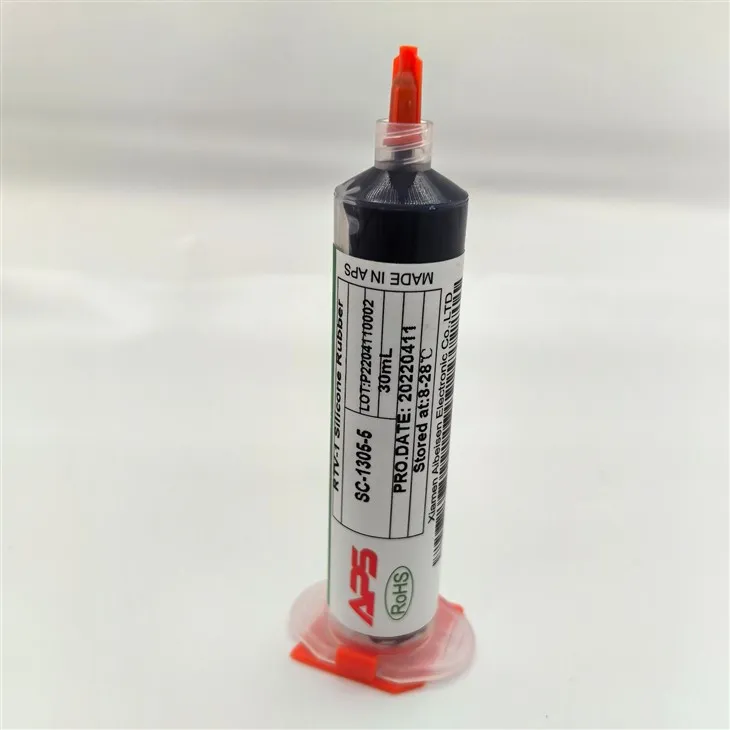
The chemical composition of the silicone adhesive plays a fundamental role in determining its peel strength. Different types of silicone, such as room - temperature vulcanizing (RTV) silicones and high - temperature vulcanizing (HTV) silicones, have distinct molecular structures and properties. RTV silicones are popular for their ease of use and fast curing at room temperature. They can form strong bonds with a variety of substrates, but their peel strength may vary depending on the specific formulation. For instance, Black Rtv Silicone Adhesive Sealant is formulated to provide good adhesion and moderate peel strength for general sealing and bonding applications.
On the other hand, HTV silicones are cured at high temperatures, resulting in a more cross - linked and durable structure. They often exhibit higher peel strength and better resistance to harsh environments, making them suitable for demanding applications in the automotive and aerospace industries.
Substrate Surface Properties
The surface characteristics of the substrate have a significant impact on the peel strength of the silicone adhesive. A clean, dry, and chemically active surface promotes better adhesion. Rough surfaces can provide more surface area for the adhesive to bond to, increasing the mechanical interlocking between the adhesive and the substrate. However, if the surface is contaminated with oils, greases, or dust, the peel strength can be severely reduced.
For example, when bonding silicone adhesive to a metal substrate, it is often necessary to pre - treat the surface through processes such as sandblasting, degreasing, or applying a primer. This helps to remove contaminants and improve the chemical interaction between the adhesive and the substrate, thereby enhancing the peel strength.
Bonding Conditions
The conditions under which the silicone adhesive is applied and cured also affect its peel strength. Temperature, humidity, and curing time are critical factors. Most silicone adhesives have an optimal temperature range for curing. If the temperature is too low, the curing process may be slow or incomplete, resulting in a weak bond. Conversely, high temperatures can cause the adhesive to cure too quickly, leading to internal stresses and reduced peel strength.
Humidity can also influence the curing of silicone adhesives, especially for moisture - curing RTV silicones. Excessive humidity can cause the adhesive to cure unevenly or form bubbles, which can weaken the bond.
Duration of the Bond
Over time, the peel strength of a silicone adhesive bond may change. In some cases, the bond may strengthen as the adhesive continues to cure and the molecular structure becomes more stable. However, exposure to environmental factors such as heat, moisture, and chemicals can cause the bond to degrade over time. For long - term applications, it is important to consider the durability of the silicone adhesive and its ability to maintain peel strength under different environmental conditions.
Measuring Peel Strength
To accurately measure the peel strength of a silicone adhesive, standardized test methods are used. These tests are typically conducted using a universal testing machine, which applies a controlled force to separate the adhesive bond at a constant rate. The force required to peel the adhesive from the substrate is recorded, and the peel strength is calculated based on the measured force and the width of the bond.
Before conducting the test, it is important to prepare the test specimens according to the relevant standards. This includes ensuring that the substrate is clean and properly prepared, the adhesive is applied evenly, and the bond is cured under the specified conditions.
Applications and Peel Strength Requirements
Different applications have different peel strength requirements. In the electronics industry, Potting Silicone is used to encapsulate electronic components to protect them from moisture, dust, and mechanical shock. While a moderate peel strength is sufficient to hold the components in place during normal use, the adhesive must also be able to withstand thermal cycling and vibration without delaminating.
In the construction industry, silicone adhesives are used for sealing joints and bonding building materials. For exterior applications, high peel strength is required to ensure that the sealant remains in place and provides a long - lasting waterproof and airtight seal. Black Adhesive Sealant Silicone Rtv is often used in construction due to its good adhesion and weather resistance.
In the automotive industry, silicone adhesives are used for bonding various components, such as gaskets, seals, and trim. High peel strength is necessary to withstand the vibrations, temperature changes, and mechanical stresses experienced during vehicle operation.

Conclusion
Peel strength is a crucial property of silicone adhesives that determines their performance in different applications. As a silicone adhesive supplier, we understand the importance of providing our customers with adhesives that meet their specific peel strength requirements. By carefully considering factors such as silicone formulation, substrate surface properties, bonding conditions, and application requirements, we can help our customers select the most suitable silicone adhesive for their needs.
If you are looking for high - quality silicone adhesives with excellent peel strength for your specific application, we invite you to contact us for further discussion. Our team of experts is ready to assist you in choosing the right product and providing technical support.
References
- ASTM D903 - Standard Test Method for Peel or Stripping Strength of Adhesive Bonds
- ISO 8510 - Adhesives - Peel test for a flexible - to - rigid bonded assembly
- Handbook of Adhesive Technology, Second Edition, edited by Skeist, I.