

Hey there! As a supplier of Silicone Thermal Pads, I often get asked about the thickness of these nifty little products. So, I thought I'd take a deep dive into this topic and share some insights with you all.
First off, let's understand what silicone thermal pads are. They're these soft, squishy pads that are used to transfer heat between two surfaces, like a CPU and a heatsink. They're super handy because they can fill in tiny gaps and irregularities between the surfaces, making sure the heat gets transferred efficiently.
Now, to the main question: What's the thickness of typical silicone thermal pads? Well, it can vary quite a bit depending on the application. In general, you'll find silicone thermal pads with thicknesses ranging from as thin as 0.1mm to as thick as 10mm. That's a pretty wide range, right?
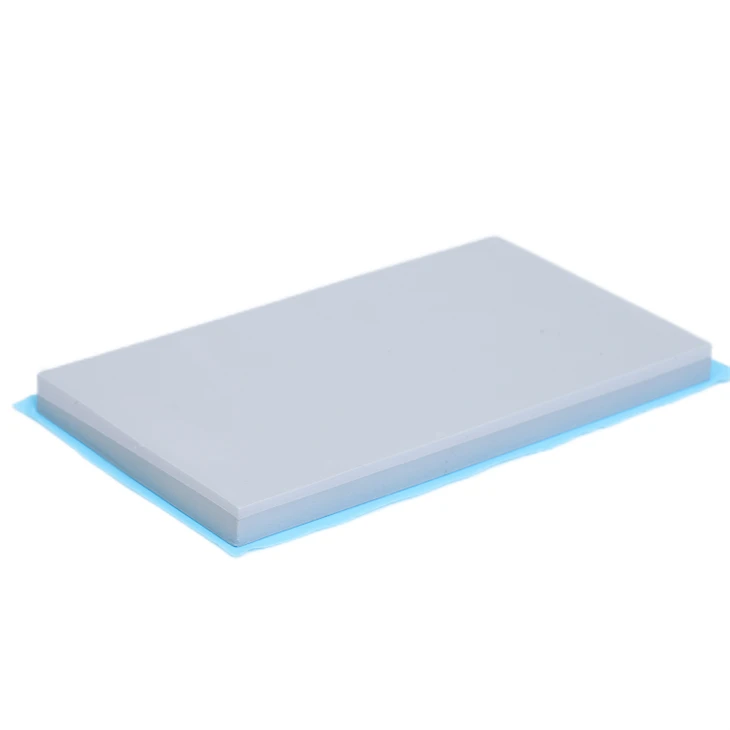

Let's start with the thinner ones. Pads with a thickness of around 0.1mm to 0.5mm are often used in applications where space is extremely limited. Think of those ultra - thin laptops or small electronic devices. These thin pads can still do a great job of transferring heat, but they need to be applied carefully because they're so delicate. They're also great for situations where you need a very precise fit between the heat - generating component and the heatsink.
Moving on to slightly thicker pads, in the range of 0.5mm to 2mm. These are probably the most commonly used silicone thermal pads. They're a good balance between flexibility and heat transfer efficiency. They can easily fill in small gaps and uneven surfaces, and they're relatively easy to handle during installation. You'll often see these in desktop computers, servers, and other standard - sized electronic equipment.
For applications where there are larger gaps between the heat source and the heatsink, we have pads with thicknesses from 2mm to 10mm. These thicker pads are used in things like industrial equipment or high - power electronics. They can absorb more shock and vibration, and they're really good at filling in those big gaps to ensure proper heat transfer.
But how do you choose the right thickness for your application? Well, it depends on a few factors. First, you need to consider the size of the gap between the heat source and the heatsink. If the gap is very small, a thin pad will do the job. But if it's larger, you'll need a thicker pad. You also need to think about the amount of heat that needs to be transferred. Thicker pads can sometimes have a slightly lower thermal conductivity compared to thinner ones, so if you're dealing with a high - power component, you might need to choose a pad that's thick enough to fill the gap but still has good thermal properties.
Another thing to keep in mind is the pressure that will be applied to the pad. If there's a lot of pressure, a thinner pad might get compressed too much and lose its effectiveness. On the other hand, if there's very little pressure, a thick pad might not make good contact with the surfaces, which can also reduce heat transfer.
Now, let me tell you a bit about the products we offer at our company. We have a wide range of Thermal Silicone Pad with different thicknesses to suit all kinds of applications. Our Thermal Conductive Pads Heatsink are designed to provide excellent heat transfer, whether you're using a thin pad for a small device or a thick pad for industrial equipment. And our Heat Transfer Gap Filler is perfect for those applications where you have large gaps to fill.
We've spent a lot of time researching and developing these products to make sure they meet the highest standards of quality and performance. Our silicone thermal pads are made from high - quality materials that are durable and reliable. They can withstand a wide range of temperatures and environmental conditions, so you can be confident that they'll work well in your application.
If you're in the market for silicone thermal pads, I'd love to have a chat with you. Whether you're not sure which thickness is right for your project or you have any other questions, I'm here to help. Just reach out, and we can start discussing your needs and finding the perfect solution for you.
In conclusion, the thickness of typical silicone thermal pads can vary widely, and choosing the right one depends on your specific application. But with the right knowledge and a good supplier, you can find the perfect pad to keep your electronics cool and running smoothly. So, don't hesitate to get in touch if you're interested in learning more or making a purchase.
References
- Thermal management textbooks
- Industry research reports on electronic cooling solutions