

Can UV curing adhesive be used for bonding fabric? This is a question that often comes up in the textile and adhesive industries. As a supplier of UV Curing Adhesive, I'm here to provide a comprehensive answer based on scientific knowledge and practical experience.
Understanding UV Curing Adhesive
UV curing adhesives are a type of adhesive that cures or hardens when exposed to ultraviolet (UV) light. This curing mechanism offers several advantages over traditional adhesives. Firstly, the curing process is extremely fast, often taking only a few seconds to a few minutes. This rapid curing time can significantly increase production efficiency, especially in high - volume manufacturing processes. Secondly, UV curing adhesives typically have low volatile organic compound (VOC) emissions, making them a more environmentally friendly option. Thirdly, they can form strong and durable bonds with a variety of substrates.

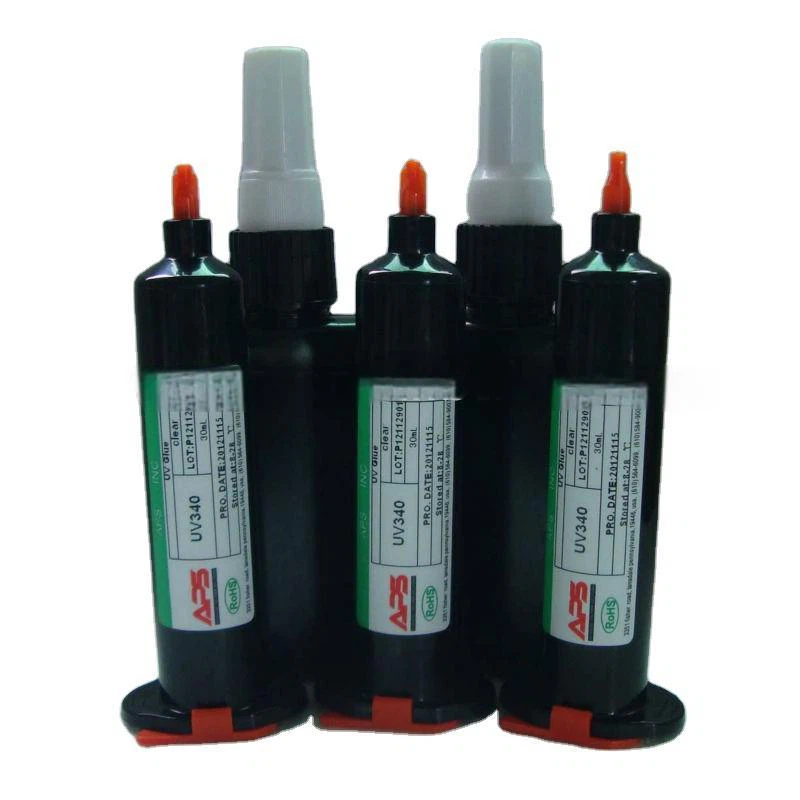
The basic components of UV curing adhesives include monomers, oligomers, photoinitiators, and additives. Monomers and oligomers are the building blocks of the adhesive, which polymerize to form a solid structure during the curing process. Photoinitiators are substances that absorb UV light and initiate the polymerization reaction. Additives are used to modify the properties of the adhesive, such as viscosity, flexibility, and adhesion.
Factors Affecting the Bonding of Fabric with UV Curing Adhesive
Fabric Type
Different types of fabrics have different surface properties, which can significantly affect the bonding performance of UV curing adhesives. Natural fibers, such as cotton, wool, and silk, have porous surfaces that can absorb the adhesive to some extent. This can enhance the mechanical interlocking between the adhesive and the fabric, resulting in a stronger bond. However, these fibers may also be sensitive to the chemicals in the adhesive, and improper selection of adhesive can cause discoloration or damage to the fabric.
Synthetic fibers, such as polyester, nylon, and acrylic, have smoother surfaces and lower surface energy compared to natural fibers. This makes it more challenging for the adhesive to wet the surface and form a strong bond. Specialized UV curing adhesives with high wetting properties and surface - active agents may be required to achieve satisfactory bonding results on synthetic fabrics.
Adhesive Properties
The properties of the UV curing adhesive, such as viscosity, flexibility, and adhesion strength, also play a crucial role in fabric bonding. A low - viscosity adhesive can penetrate the fabric more easily, improving the mechanical interlocking between the adhesive and the fibers. However, if the viscosity is too low, the adhesive may flow out of the bonding area, resulting in uneven bonding.
Flexibility is another important property, especially for fabrics that are subject to stretching or bending during use. An adhesive that is too rigid can cause the fabric to crack or delaminate under stress. Therefore, a flexible UV curing adhesive is often preferred for fabric bonding applications.
Adhesion strength is, of course, the most critical property. The adhesive should be able to form a strong bond with the fabric surface and withstand the forces applied during normal use. The adhesion strength can be affected by factors such as the type of photoinitiator, the curing conditions, and the surface treatment of the fabric.
Curing Conditions
Proper curing conditions are essential for achieving optimal bonding performance. The intensity and duration of UV light exposure are the two main factors that affect the curing process. If the UV light intensity is too low or the exposure time is too short, the adhesive may not cure completely, resulting in a weak bond. On the other hand, if the UV light intensity is too high or the exposure time is too long, the fabric may be damaged by the heat generated during the curing process.
The wavelength of the UV light also matters. Different photoinitiators are sensitive to different wavelengths of UV light. Therefore, it is necessary to choose a UV light source with the appropriate wavelength to ensure efficient curing of the adhesive.
Applications of UV Curing Adhesive in Fabric Bonding
Textile Manufacturing
In textile manufacturing, UV curing adhesives can be used for various purposes, such as seam sealing, hem finishing, and lamination. Seam sealing is an important process to prevent fraying and improve the durability of the seams. UV curing adhesives can provide a strong and flexible seal that can withstand repeated washing and wear.
Hem finishing is another application where UV curing adhesives can be used. Instead of traditional stitching methods, which may leave visible stitches and reduce the smoothness of the fabric surface, UV curing adhesives can create a seamless and clean hem finish.
Lamination is the process of bonding two or more layers of fabric together. UV curing adhesives can be used to create a strong and permanent bond between the layers, while maintaining the flexibility and breathability of the fabric.
Apparel and Footwear Industry
In the apparel and footwear industry, UV curing adhesives are used for bonding decorative elements, such as patches, labels, and rhinestones, to the fabric. These adhesives can provide a strong and aesthetically pleasing bond that can withstand the rigors of daily use.
UV curing adhesives are also used in the production of footwear. They can be used to bond the upper to the sole, as well as to attach decorative elements to the shoe. The fast curing time of UV curing adhesives allows for high - speed production, which is essential in the mass - production environment of the footwear industry.
Automotive and Aerospace Textiles
In the automotive and aerospace industries, fabrics are used for various applications, such as seat covers, headliners, and insulation materials. UV curing adhesives can be used to bond these fabrics to other components, such as plastic parts and metal frames. The high strength and durability of UV curing adhesives make them suitable for these demanding applications, where the bonded parts need to withstand high temperatures, vibrations, and mechanical stresses.
Advantages of Using UV Curing Adhesive for Fabric Bonding
Fast Production Speed
As mentioned earlier, the fast curing time of UV curing adhesives allows for rapid production. This can significantly reduce the production cycle time and increase the overall productivity of the manufacturing process. In a high - volume production environment, such as textile manufacturing and apparel production, this can translate into significant cost savings.
High Bond Strength
UV curing adhesives can form strong and durable bonds with fabrics. The mechanical interlocking between the adhesive and the fabric fibers, combined with the chemical bonding provided by the adhesive, results in a bond that can withstand a variety of forces, such as stretching, tearing, and shearing.
Environmental Friendliness
Compared to traditional adhesives, UV curing adhesives have lower VOC emissions. This makes them a more environmentally friendly option, which is increasingly important in today's society. Additionally, the fast curing time of UV curing adhesives reduces the energy consumption during the production process, further contributing to environmental sustainability.
Our UV Curing Adhesive Products for Fabric Bonding
We offer a range of UV Curing Adhesive products specifically designed for fabric bonding applications. Our UV Sealant is a high - performance adhesive that provides excellent sealing properties for fabric seams. It is flexible, waterproof, and resistant to washing and wear.
Our UV Clean Adhesive is ideal for applications where a clean and seamless bond is required, such as hem finishing and lamination. It has low viscosity and high wetting properties, which allow it to penetrate the fabric easily and form a strong bond without leaving any visible residue.
Conclusion
In conclusion, UV curing adhesive can be used for bonding fabric, and it offers many advantages over traditional adhesives. However, the successful use of UV curing adhesive in fabric bonding depends on several factors, such as fabric type, adhesive properties, and curing conditions. By carefully selecting the appropriate adhesive and optimizing the curing process, it is possible to achieve strong, durable, and aesthetically pleasing bonds between UV curing adhesives and fabrics.
If you are interested in our UV curing adhesive products for fabric bonding, please contact us for more information and to discuss your specific requirements. We are committed to providing high - quality adhesive solutions to meet your needs.
References
- "Adhesives Technology Handbook" by Andrew Pizzi and K. L. Mittal
- "Textile Science and Technology" by A. K. Majumdar
- Research papers on UV curing adhesives and fabric bonding from scientific journals such as "Journal of Adhesion Science and Technology" and "Textile Research Journal"