

As a supplier of UV Curing Adhesive, I've witnessed firsthand the remarkable versatility and transformative impact of this technology in the electronics industry. UV curing adhesives are a type of adhesive that cures rapidly when exposed to ultraviolet (UV) light. This unique curing mechanism offers numerous advantages, including fast processing times, high bond strength, and excellent chemical resistance. In this blog post, I'll explore the various applications of UV curing adhesive in electronics and highlight why it's becoming an increasingly popular choice for manufacturers.
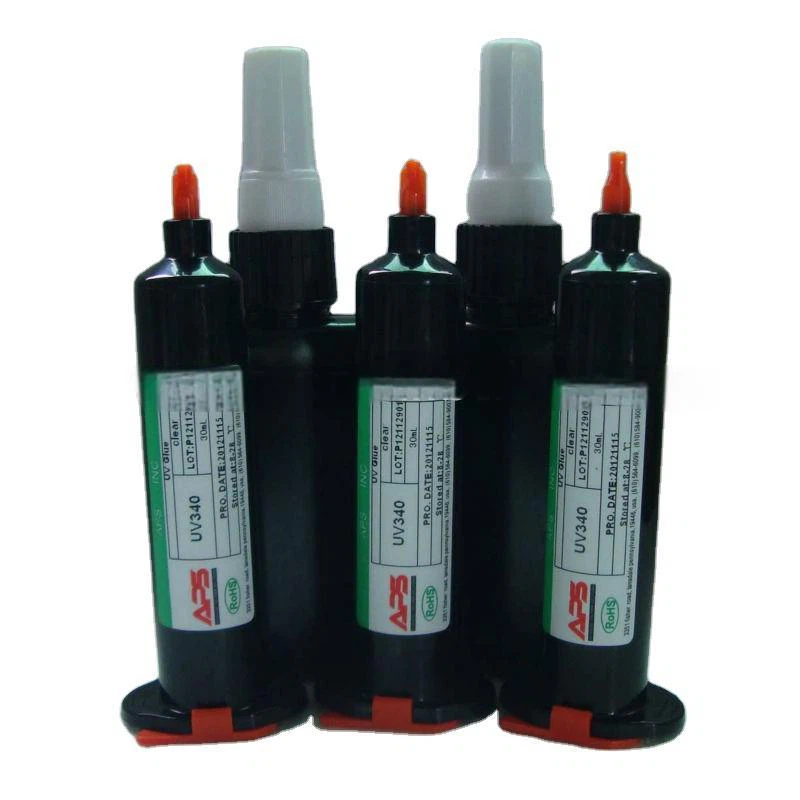

Bonding of Electronic Components
One of the primary applications of UV curing adhesive in electronics is the bonding of electronic components. These adhesives are used to attach various components such as chips, resistors, capacitors, and connectors to printed circuit boards (PCBs). The fast curing time of UV adhesives allows for high - speed assembly processes, which is crucial in mass - production environments.
For example, in the manufacturing of smartphones, UV curing adhesives are used to bond the touchscreen to the display module. The adhesive provides a strong, durable bond that can withstand the rigors of daily use, including impacts and vibrations. Additionally, the optical clarity of some UV adhesives makes them ideal for applications where visibility through the bond is required, such as in display assemblies.
The UV Curing Adhesive we supply is formulated to meet the specific requirements of electronic component bonding. It offers excellent adhesion to a wide range of substrates, including metals, plastics, and glass, ensuring reliable connections between components.
Encapsulation and Potting
UV curing adhesives are also widely used for encapsulation and potting of electronic components. Encapsulation involves covering a component with a protective layer of adhesive to shield it from environmental factors such as moisture, dust, and chemicals. Potting, on the other hand, involves filling a cavity or enclosure with adhesive to provide mechanical support and protection to the components inside.
In the automotive electronics industry, for instance, UV curing adhesives are used to encapsulate sensors and control modules. These adhesives protect the sensitive electronic components from the harsh automotive environment, including high temperatures, vibrations, and exposure to chemicals. The fast curing nature of UV adhesives allows for quick turnaround times in the manufacturing process, reducing production costs.
Our UV Sealant is an excellent choice for encapsulation and potting applications. It has good flow properties, allowing it to fill complex shapes and cavities easily. Once cured, it forms a tough, protective barrier that helps to extend the lifespan of the electronic components.
Wire and Cable Bonding
Another important application of UV curing adhesive in electronics is wire and cable bonding. In electronic devices, wires and cables need to be securely attached to connectors and other components to ensure proper electrical conductivity. UV curing adhesives provide a reliable solution for this purpose.
The adhesive can be used to bond the insulation of wires to connectors, preventing the wires from coming loose and reducing the risk of short - circuits. In addition, UV curing adhesives can be used to seal the ends of cables, protecting them from moisture and environmental damage.
For example, in the production of headphones, UV curing adhesives are used to bond the wires to the audio connectors. The fast - curing adhesive ensures a strong bond, which is essential for maintaining good sound quality and preventing signal loss. Our UV Clean Adhesive is suitable for wire and cable bonding applications, as it leaves a clean bond line and doesn't interfere with the electrical performance of the wires.
Display Assembly
In the display industry, UV curing adhesives play a crucial role in the assembly of various types of displays, including liquid crystal displays (LCDs), organic light - emitting diode (OLED) displays, and touchscreens.
For LCDs, UV curing adhesives are used to bond the polarizer films to the glass substrate. The adhesive provides a clear, uniform bond that is essential for the proper functioning of the display. In OLED displays, UV adhesives are used to bond the flexible substrates and protect the delicate organic layers from moisture and oxygen.
Touchscreens also rely on UV curing adhesives for their assembly. The adhesive is used to bond the touch sensor to the display panel, ensuring accurate touch response and a seamless user experience. Our UV curing adhesives are designed to meet the high - precision requirements of display assembly, offering excellent optical properties and bond strength.
Advantages of Using UV Curing Adhesive in Electronics
There are several advantages to using UV curing adhesive in electronics manufacturing. Firstly, the fast curing time significantly reduces production cycle times. Unlike traditional adhesives that may take hours or even days to cure, UV adhesives can be cured in a matter of seconds or minutes, allowing for high - volume production.
Secondly, UV curing adhesives offer excellent bond strength. They can form strong bonds with a variety of substrates, which is essential for ensuring the reliability and durability of electronic devices.
Thirdly, UV curing adhesives are environmentally friendly. They typically have low volatile organic compound (VOC) emissions, which reduces the impact on the environment and the health of workers.
Finally, the curing process of UV adhesives is controllable. Manufacturers can precisely control the curing time and intensity of the UV light, which allows for greater flexibility in the manufacturing process.
Future Trends in the Use of UV Curing Adhesive in Electronics
The demand for UV curing adhesive in the electronics industry is expected to continue to grow in the future. As electronic devices become smaller, more powerful, and more complex, the need for high - performance adhesives will increase.
One of the emerging trends is the development of UV curing adhesives with enhanced properties, such as higher temperature resistance, better flexibility, and improved electrical conductivity. These adhesives will be able to meet the requirements of new electronic applications, such as 5G technology, artificial intelligence, and the Internet of Things (IoT).
Another trend is the integration of UV curing technology with other manufacturing processes. For example, the combination of UV curing adhesives with 3D printing technology can enable the rapid prototyping and production of complex electronic components.
Conclusion
In conclusion, UV curing adhesive has a wide range of applications in the electronics industry, from component bonding and encapsulation to wire and cable bonding and display assembly. As a supplier of UV Curing Adhesive, we are committed to providing high - quality products that meet the evolving needs of the electronics manufacturing sector.
If you are involved in the electronics industry and are looking for a reliable UV curing adhesive solution, we invite you to contact us for a detailed discussion about your specific requirements. Our team of experts is ready to assist you in finding the most suitable adhesive for your applications. We can provide samples for testing and offer technical support throughout the procurement and implementation process.
References
- "Handbook of Adhesives in Electronics" by C. A. Dostal
- "Advanced Adhesive Technologies for Electronic Packaging" by Y. C. Chan