

Yo, I'm a supplier of UV Curing Adhesive. You know, UV adhesives are pretty cool stuff. They've got a wide range of applications, from electronics to optics, and even in the automotive industry. But one thing that often gets overlooked is the effect of light exposure angle on the curing of these adhesives. So, let's dive into this topic and see what's going on.
First off, what exactly is UV curing? Well, it's a process where a UV adhesive is exposed to ultraviolet light. This light triggers a chemical reaction in the adhesive, causing it to harden or "cure." It's a super-fast and efficient way to bond materials together. And that's why UV adhesives, like the ones we offer at [not adding made - up company name], are so popular. You can check out our UV Curing Adhesive on our website.
Now, let's talk about the light exposure angle. The angle at which the UV light hits the adhesive can have a significant impact on the curing process. When the light hits the adhesive at a perpendicular angle (90 degrees), it usually provides the most uniform and efficient curing. This is because the light penetrates the adhesive evenly, reaching all parts of it at the same time.
Think of it like shining a flashlight straight down on a piece of paper. The light spreads out evenly across the paper, and you can see clearly in that area. Similarly, when UV light hits the adhesive at a 90 - degree angle, it can activate the photo - initiators in the adhesive uniformly. These photo - initiators are the key components that start the curing reaction.
But what happens when the light hits at an angle other than 90 degrees? Well, things can get a bit more complicated. If the light hits at a shallow angle, say 30 degrees, the light has to travel through a greater thickness of the adhesive in some areas. This can lead to uneven curing. In the areas where the light has to travel further, the curing might be incomplete or slower compared to the areas where the light hits more directly.
It's like shining that flashlight at an angle on the paper. The part of the paper closest to the flashlight is well - lit, but the areas further away are in a bit of a shadow. In the case of UV adhesives, those "shadowed" areas might not cure properly, which can affect the overall strength and performance of the bond.
Another aspect to consider is the depth of curing. When the light hits at a perpendicular angle, it can penetrate deeper into the adhesive. This is crucial, especially for thick layers of adhesive. If you're using a UV Clean Adhesive to bond two thick pieces of material, you need the adhesive to cure all the way through. A perpendicular light angle helps ensure that the curing reaches the bottom layers of the adhesive.
On the other hand, a non - perpendicular light angle can limit the depth of curing. The light might be absorbed or scattered more on the surface of the adhesive, not reaching the deeper layers effectively. This can result in a strong surface bond but a weak bond in the middle or at the bottom of the adhesive layer.
Now, in real - world applications, it's not always possible to have the light hit the adhesive at a perfect 90 - degree angle. For example, in some complex manufacturing processes, the parts being bonded might have irregular shapes or be in hard - to - reach places. In these cases, we need to find ways to compensate for the non - ideal light exposure angles.
One solution is to use multiple light sources. By placing lights at different angles around the adhesive, we can ensure that all parts of the adhesive receive enough light. It's like having multiple flashlights shining on the paper from different directions. This helps to reduce the shadow areas and promotes more uniform curing.
Another option is to adjust the intensity and duration of the light exposure. If the light is hitting at a non - perpendicular angle, we can increase the light intensity or the exposure time. This gives the photo - initiators more time and energy to start the curing reaction, even in the areas where the light is not hitting as directly.
But it's important to note that increasing the light intensity or exposure time too much can also have negative effects. It can cause over - curing, which can make the adhesive brittle and reduce its flexibility. So, it's all about finding the right balance.

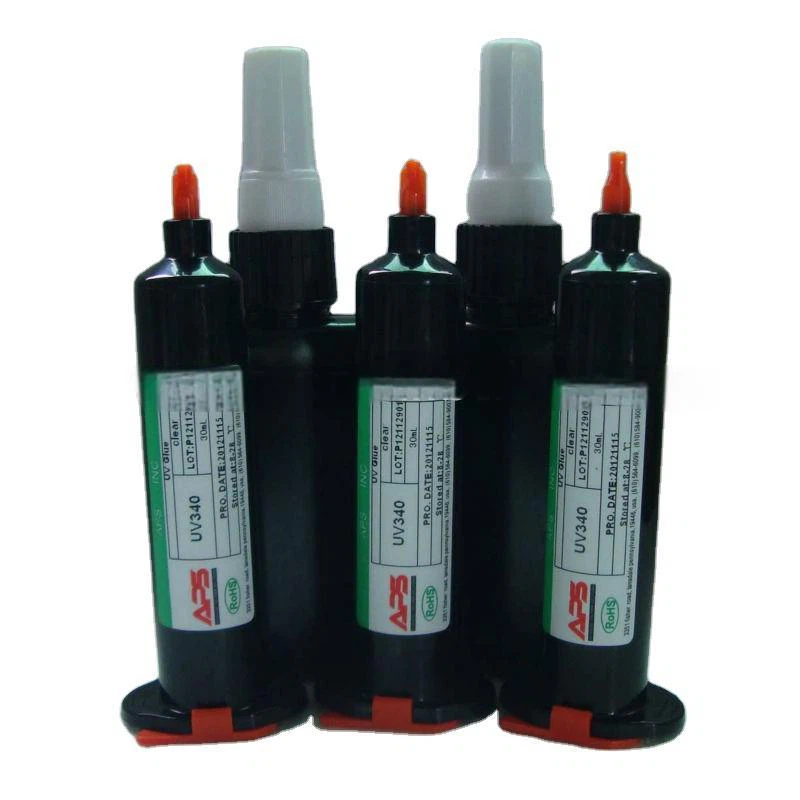
We also offer Light Curable Adhesive products that are designed to be more forgiving when it comes to light exposure angles. These adhesives have special formulations that can still cure effectively even when the light hits at non - ideal angles.
So, why does all this matter? Well, if you're in an industry that uses UV adhesives, getting the curing process right is crucial. A poorly cured adhesive can lead to product failures, such as parts coming loose or bonds breaking under stress. This can result in costly rework, warranty claims, and damage to your brand reputation.
As a UV adhesive supplier, we understand the importance of providing you with the best products and advice. We can help you choose the right adhesive for your specific application and give you tips on how to optimize the light exposure conditions. Whether you're working on a small - scale project or a large - scale manufacturing operation, we've got your back.
If you're interested in learning more about our UV adhesives or have questions about the light exposure angle and curing process, don't hesitate to reach out. We're always happy to have a chat and discuss how we can meet your needs. Just visit our website and check out our product range. We're confident that you'll find the perfect adhesive for your project.
In conclusion, the light exposure angle plays a vital role in the curing of UV adhesives. A perpendicular angle usually provides the best results, but in real - world scenarios, we need to be flexible and find solutions to ensure proper curing. By using multiple light sources, adjusting light intensity and duration, and choosing the right adhesive formulation, we can overcome the challenges posed by non - ideal light exposure angles. So, if you're in the market for high - quality UV adhesives, give us a shot. Let's work together to make your bonding projects a success.
References
- "UV Curing Technology: Fundamentals and Applications" by John W. Taylor
- "Adhesive Bonding: Science, Technology, and Applications" by A. V. Pocius