

As a supplier of Gap Pads, I've witnessed firsthand the crucial role these products play in thermal management across various industries. One of the key properties that often comes under scrutiny is the impact resistance of Gap Pads. In this blog post, I'll delve into what impact resistance means for Gap Pads, why it matters, and how it affects their performance in real - world applications.
Understanding Impact Resistance
Impact resistance refers to a material's ability to withstand sudden forces or shocks without significant damage or loss of functionality. For Gap Pads, this is a vital characteristic as they are often used in environments where they may be subjected to mechanical vibrations, drops, or collisions. When a Gap Pad is exposed to an impact, it needs to maintain its shape, integrity, and thermal conductivity properties.
The structure of a Gap Pad contributes significantly to its impact resistance. Most Gap Pads are made of a soft, compliant material, such as silicone, filled with thermally conductive particles. The softness allows the pad to conform to irregular surfaces, filling gaps and providing efficient heat transfer. However, this softness also means that the pad may be more vulnerable to damage from impacts. To enhance impact resistance, manufacturers often use additives or special formulations to strengthen the base material.
Why Impact Resistance Matters
In many applications, Gap Pads are used in devices that are prone to movement or handling. For example, in laptops and other portable electronics, the internal components are constantly jostled as the device is carried around. A Gap Pad with poor impact resistance may crack or break under these conditions, leading to a loss of thermal contact between the heat - generating component (such as the CPU) and the heat sink. This can result in increased operating temperatures, reduced performance, and even premature failure of the device.
In automotive applications, Gap Pads are used in electronic control units (ECUs) and power electronics. These components are exposed to vibrations from the engine, road bumps, and other mechanical stresses. If a Gap Pad fails due to impact, it can cause overheating of the electronics, which may lead to malfunctions in critical systems such as the engine management or safety features.
Measuring Impact Resistance
There are several methods to measure the impact resistance of Gap Pads. One common approach is the drop test. In a drop test, a sample of the Gap Pad is placed on a rigid surface and dropped from a specific height onto a hard object. The number of drops it can withstand before showing signs of damage, such as cracking or delamination, is recorded.
Another method is the vibration test. In this test, the Gap Pad is subjected to continuous vibrations at different frequencies and amplitudes. The test measures the pad's ability to maintain its shape and thermal conductivity under these dynamic conditions.
Impact Resistance and Thermal Performance
It's important to note that there is often a trade - off between impact resistance and thermal performance. Materials that are highly impact - resistant may have lower thermal conductivity because the additives used to strengthen the material can interfere with the heat transfer path. Conversely, materials with high thermal conductivity may be more brittle and less impact - resistant.
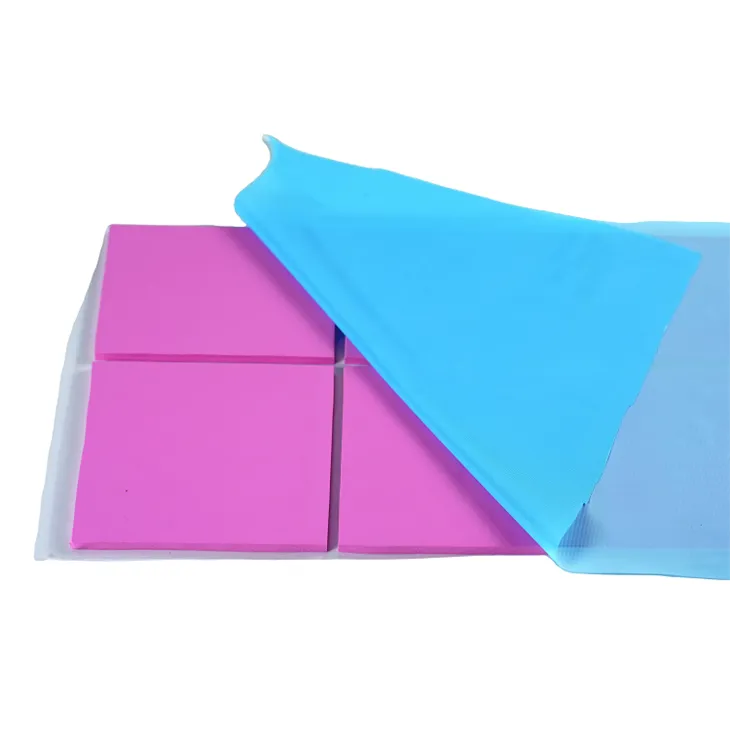

As a Gap Pad supplier, we strive to find the right balance between these two properties. Through extensive research and development, we've been able to formulate Gap Pads that offer both excellent impact resistance and high thermal conductivity. For example, our Laptop Cpu Thermal Pad is designed to withstand the rigors of daily use in laptops while providing efficient heat dissipation from the CPU.
Applications and Impact Resistance Requirements
Different applications have different impact resistance requirements. In consumer electronics, such as smartphones and tablets, the Gap Pads need to be able to withstand minor bumps and drops during normal use. These devices are typically handled more gently than industrial or automotive applications, so the impact resistance requirements are relatively lower.
In industrial settings, Gap Pads are used in heavy - duty equipment such as manufacturing machinery and power generators. These devices are often subjected to more severe impacts and vibrations, so the Gap Pads need to have a high level of impact resistance. Our High Conductivity Thermal Pad is suitable for such industrial applications, as it combines high thermal conductivity with excellent impact resistance.
In the aerospace industry, Gap Pads are used in avionics and other critical systems. The components in these applications are exposed to extreme conditions, including high - altitude vibrations and rapid temperature changes. The Gap Pads used in aerospace need to have exceptional impact resistance to ensure the reliability of the systems.
Improving Impact Resistance
There are several ways to improve the impact resistance of Gap Pads. One approach is to use a tougher base material. For example, some manufacturers are exploring the use of fluorosilicone instead of traditional silicone. Fluorosilicone has better chemical resistance and mechanical strength, which can enhance the impact resistance of the Gap Pad.
Another method is to optimize the filler particles. By using a combination of different - sized and - shaped filler particles, we can improve the dispersion of the particles in the base material and strengthen the overall structure of the Gap Pad. This can lead to better impact resistance without sacrificing too much thermal conductivity.
Our Product Range and Impact Resistance
At our company, we offer a wide range of Gap Pads with varying levels of impact resistance to meet the needs of different applications. Our Conductive Silicone Gasket is not only highly thermally conductive but also has good impact resistance. It is made of a high - quality silicone material filled with conductive particles, which provides excellent electrical and thermal performance.
We also offer custom - made Gap Pads. If you have specific impact resistance requirements for your application, our team of experts can work with you to develop a solution that meets your needs. We can adjust the formulation, thickness, and other properties of the Gap Pad to ensure optimal performance.
Conclusion
Impact resistance is a critical property of Gap Pads that can significantly affect their performance and reliability in various applications. As a Gap Pad supplier, we understand the importance of providing products that can withstand the mechanical stresses they are likely to encounter. Whether you are in the consumer electronics, automotive, industrial, or aerospace industry, we have the right Gap Pad solution for you.
If you are interested in learning more about our Gap Pads or have specific requirements for your application, please don't hesitate to contact us. We are ready to engage in procurement discussions and help you find the best thermal management solution for your needs.
References
- "Thermal Interface Materials: Fundamentals and Applications" by X. D. Wang
- "Handbook of Electronic Packaging Thermal Management" by Avram Bar - Cohen et al.
- Industry standards and guidelines for thermal management in electronics and automotive applications.